
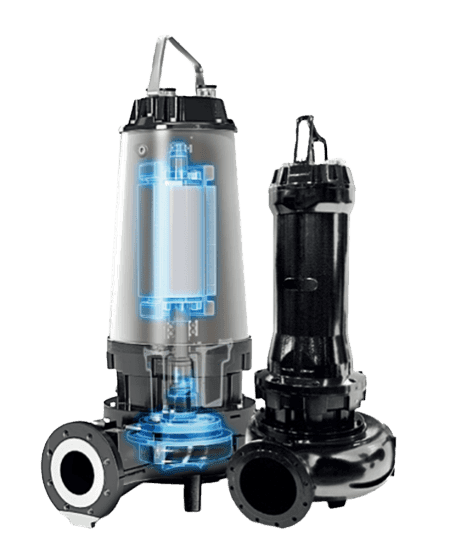
 Pumping systems are among the most energy-intensive components in many industrial, construction, mining, and water management applications. Over time, changes in system demands, normal wear, and inefficient operating practices can significantly increase energy consumption without improving output.
Improving energy efficiency is rarely achieved through a single change. Instead, it requires a system-level approach that considers pump selection, operating conditions, control methods, installation, and ongoing maintenance. When pumps are correctly matched to their application and operated within their optimal range, meaningful reductions in power consumption can be achieved while improving reliability and service life.
Tsurumi’s range of submersible pumps and automatic control solutions are designed with this system-based approach in mind, helping operators reduce unnecessary energy use while maintaining consistent performance across demanding applications.
Selecting the Right Pump for the Application
One of the most common causes of poor energy efficiency is incorrect pump selection. Pumps that are oversized or mismatched to system requirements often operate well outside their Best Efficiency Point (BEP), resulting in unnecessary energy use and increased mechanical stress.
Oversizing can occur during early design stages when system losses are conservatively estimated, future expansion is anticipated, or additional safety margins are applied. While some allowance is necessary, excessive oversizing leads to higher operating costs over the life of the pump.
Tsurumi offers a wide range of application-specific pumps, including drainage, wastewater, slurry, sewage and construction models, enabling the selection of pumps that closely match actual operating conditions. Selecting the correct pump from the outset ensures operation closer to the BEP, improving energy efficiency while reducing wear on seals, bearings, and motors. Read our related Pump Selection Guide article for more information.
Operating Pumps Close to the Best Efficiency Point (BEP)
The BEP represents the point on a pump curve where hydraulic efficiency is maximised. Operating significantly outside this range increases energy losses and accelerates component wear.
Pumps operating far outside the BEP often require throttling or bypassing to meet system requirements, both of which waste energy. Designing systems so that normal operating conditions align with the BEP helps stabilise performance, reduce vibration, and minimise power consumption.
Correct pump selection, combined with appropriate control methods, allows many Tsurumi pumps to operate efficiently across a wide range of duties while remaining close to their optimal efficiency point. Want to grasp a better understanding on BEP, read our related article.
 Automatic Operation and Intelligent Control
 Automatic Operation and Intelligent Control
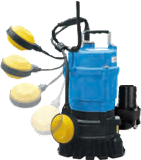
Unnecessary pump operation is a major contributor to wasted energy. Tsurumi’s automatic control solutions ensure pumps operate only when required, based on actual site conditions.
Automatic operation using electrode control devices or float switches prevents dry-running, excessive cycling, and extended run times. These systems activate pumps only when water reaches a predetermined level and stop operation once the duty is complete, significantly reducing energy consumption.
Tsurumi’s automatic pump ranges, including the KTVE, HSZ, UTZ, TM ,PU, PN and LB-A series, are designed to minimise unnecessary runtime while protecting internal components and extending pump life. Head to our article on the Difference between float switches and electrodes to learn more.
Variable Speed Drives and Smart Control Systems
In applications with fluctuating flow requirements, Variable Speed Drives (VSDs) or Variable Frequency Drives (VFDs) can significantly improve energy efficiency.
By adjusting motor speed to match actual demand, pumps can operate closer to their BEP over a wider range of conditions. Reducing speed when full output is not required delivers substantial energy savings, while also lowering mechanical stress and reducing wear.
When combined with intelligent level control or automation systems, variable speed operation ensures pumps are activated only when needed, preventing energy waste and improving overall system efficiency.
Impeller Condition and Wear Management
Impeller wear directly impacts pump efficiency. As clearances increase due to abrasion or corrosion, hydraulic losses rise and more energy is required to achieve the same output.
Maintaining impeller condition and internal clearances is essential for preserving efficiency. Routine inspection and timely replacement of worn components help ensure pumps continue to operate within their designed performance range.
Tsurumi pumps are engineered with durability in mind, but even the most robust designs benefit from regular maintenance to minimise efficiency losses and long-term operating costs.
Correct Submergence and Installation

Proper installation is critical to the energy-efficient operation of a pump. Pumps must be submerged to the recommended continuous water level to ensure stable hydraulic conditions and effective motor cooling.
Insufficient submergence can lead to air entrainment, cavitation, unstable flow, overheating and increased power consumption. Ensuring correct installation depth helps pumps operate efficiently and reliably throughout their duty cycle.
Correct submergence is particularly important for automatic pumps, as stable water levels support accurate control and prevent unnecessary start-stop cycling.
The Influence of Piping and Valve Design
The design of the piping and valve system directly affects pump energy efficiency. Poorly designed layouts create friction losses that increase head requirements and force pumps to consume more power.
Energy efficiency can be improved by:
- Minimising unnecessary pipe length and sharp bends
- Avoiding sudden changes in pipe diameter
- Using appropriately sized pipework
A well-designed piping system allows pumps to operate closer to their intended duty point, reducing energy losses across the entire system.
Ongoing Maintenance and Efficiency Retention
Pump wear is unavoidable, but its impact on energy efficiency can be managed through routine maintenance. Wear can cause the BEP to shift and efficiency to decline, increasing energy consumption over time.
Regular maintenance activities such as impeller inspection, bearing checks, seal replacement, alignment verification, and pipe cleaning help slow efficiency losses and extend pump life. In applications where maintenance cannot restore acceptable efficiency, replacing an ageing or inefficient pump may yield the greatest long-term energy savings.
Conclusion
Improving energy efficiency in pumping systems requires a holistic approach that considers pump selection, control methods, installation, and ongoing maintenance. Operating pumps close to the BEP, using automatic and control systems, maintaining critical components, and optimising system design all contribute to reduced power consumption.
Tsurumi’s range of energy-efficient pumps and intelligent control solutions demonstrate how careful engineering and system optimisation can deliver reliable performance while minimising energy use. By focusing on efficiency across the entire pumping system, operators can achieve lower running costs, improved reliability, and extended equipment life.