
Submersible Pumps Anti-wicking cable entry
Tsurumi designed the anti-wicking cable entry. Anti-wicking prevents water incursion due to capillary action should the cable sheath be damaged or the end of cable submerged. Also prevents moist air from infiltrating the motor housing and condensation from forming inside the housing due to temperature differences between the housing and outside air.
Single-phase & Small Three-phase Pumps
Benefits:
- Prevents motor damage from water ingress
- Complete anti-wicking protection
- Lowers maintenance and downtime
- Improves reliability in harsh environments
- Manufactured in all Tsurumi single-phase and certain three-phase submersible pumps
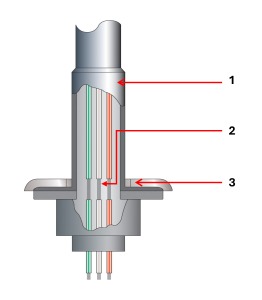
1. Molded cable boot
This extends the bending radius of the cable & flex and reduces fatigue and extends to the flex life of the cable jacket.
2. Cable gland
Compresses the molded cable flange a full 360°and prevents over tightening. It prevents the gasket from bulging and secures complete sealing.
3. Anti-wicking block
A portion of each conductor is stripped back, and sealed by molded rubber. The rubber in between each strand of the conductor prevents incursion of water into the motor due to the phenomenon known as “wicking”.
Medium & large Three-phase Pumps Cable Entry
Benefits:
- Customers can do an epoxy pour themselves
- Easy and quick replacement
- Protects internal workings from damaged cables when cables are submerged
- Complete anti-wicking protection
- Manufactured in Tsurumi three-phase pumps & aerators
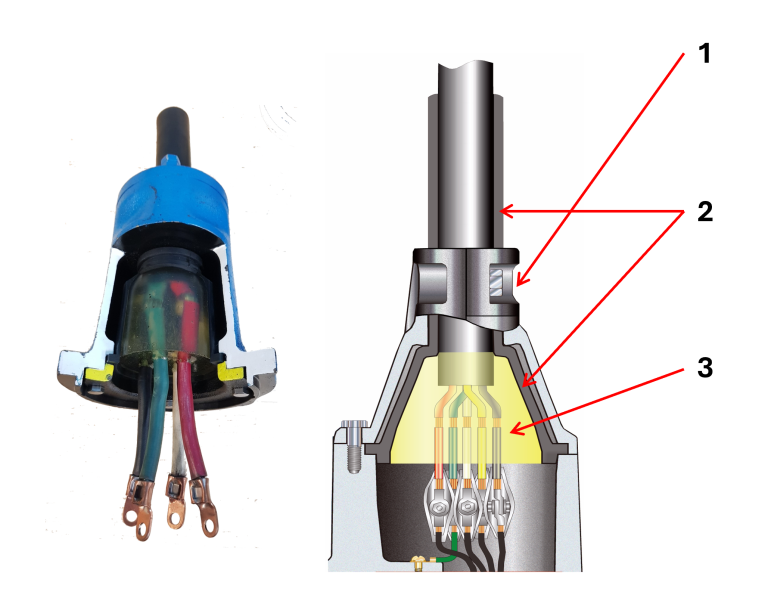
1. Cable Clamp/Gland
Is the primary seal. It compresses the cable mold cover a full 360° around the power cable insuring a watertight fit, and relieves strain on the connections.
2. Mold Cover
Extends the bending radius of the power cable reducing fatigue and extends the flex life of the cable jacket.
3. Anti-wicking block
A portion of each conductor is stripped back exposing the copper conductor, and epoxy is poured into the mold cover. It flows between each strand of the conductor, preventing incursion of water into the motor due to the phenomenon known as “wicking”.