
Submersible pumps operating in sewage, wastewater or high-solids applications are increasingly facing a common challenge: persistent clogging caused by wipes, sanitary products, fibrous materials and other non-dispersible solids entering the system.
Soft blockages and ragging issues can significantly impact pumping performance, increase maintenance requirements and lead to costly downtime. Industry research suggests that more than 60% of sewage pumping station callouts are directly related to pump blockages. In severe cases, clogging can result in complete pump failure, emergency maintenance and expensive repairs.
Fortunately, many clogging issues can be prevented through proper pump selection, system design and routine maintenance. In applications where solids, fibres and debris are unavoidable, cutter and grinder pumps can provide an effective long-term solution.
Common Challenges in High-Solids Pumping Applications
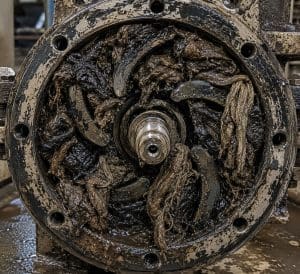
Submersible pumps can experience clogging for a variety of reasons, including:
- Excessive wipes, rags and fibrous materials entering the system
- Incorrect pipe sizing that restricts solids passage
- Low pipeline velocity allowing solids to settle
- Improper pump selection for the application
- Operating pumps outside their Best Efficiency Point (BEP)
- Inadequate screening or pre-treatment systems
- Lack of regular pump maintenance and inspection
When these factors combine, solids can accumulate around the impeller, suction plate or discharge piping, reducing efficiency and increasing wear on pump components.
Preventing Pump Clogging
While no system is completely immune to blockages, the following measures can significantly reduce the risk:
1. Select the Right Pump
Pump selection is one of the most important factors in preventing clogging. Ensure the pump is capable of handling the expected solids size, concentration and fibre content. For challenging sewage and wastewater applications, cutter or grinder pumps can reduce solids into smaller particles before they enter the discharge pipeline. Learn more about pump selection.
2. Ensure Correct Pipe Sizing
Discharge pipework should be sized appropriately for the solids being pumped. Pipes that are too small can create restrictions, while oversized pipes may allow solids to settle due to reduced flow velocity.
3. Maintain Adequate Flow Velocity
Maintaining sufficient velocity within the pipeline helps keep solids suspended and reduces sediment build-up.
4. Install Effective Screening
Strainers and screening systems can prevent large debris from entering the pump and causing damage or blockages.
5. Schedule Routine Maintenance
Regular inspections of the suction plate, impeller and pump intake help identify build-up before it becomes a major problem. Preventative maintenance is generally far less costly than emergency repairs.
Case Study: C Series Eliminates Persistent Blockages
A municipal wastewater operator in United Kingdom was experiencing frequent pump blockages caused by wipes and fibrous material entering the pumping station.
The maintenance burden had increased significantly, with cleaning required several times per week.
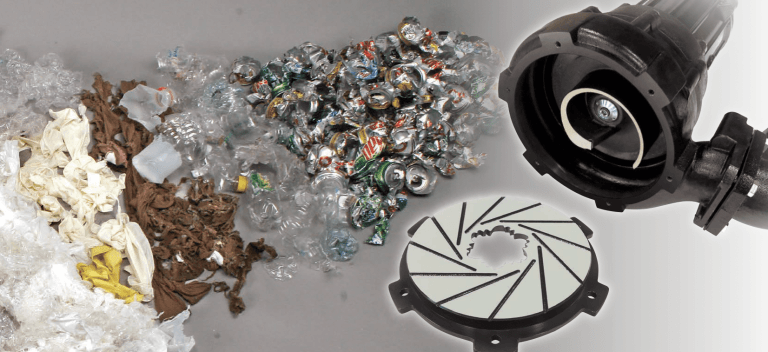
To address the issue, a Tsurumi C Series cutter pump was installed. The pump incorporates a tungsten carbide cutting mechanism, impeller and suction plate, allowing solids and fibrous materials to be effectively cut before entering the discharge line. After several months of operation, the operator reported that blockages and clogging had been eliminated, substantially reducing maintenance requirements and improving pumping station reliability.
C Series Cutter Pumps
The C Series has been a proven solution for challenging wastewater applications for decades. Key features include:
- Tungsten carbide cutting mechanism
- Excellent resistance to wear
- Effective handling of wipes, fibres and ragging materials
- Suitable for municipal and industrial wastewater applications
- Available in multiple sizes and performance ranges